

The Problem Most People Underestimate
Smoke odor is one of the most stubborn and misunderstood odor problems homeowners and property managers face.
You clean the surfaces.
You open the windows.
You spray something that smells “fresh.”
And yet… the smell keeps coming back.
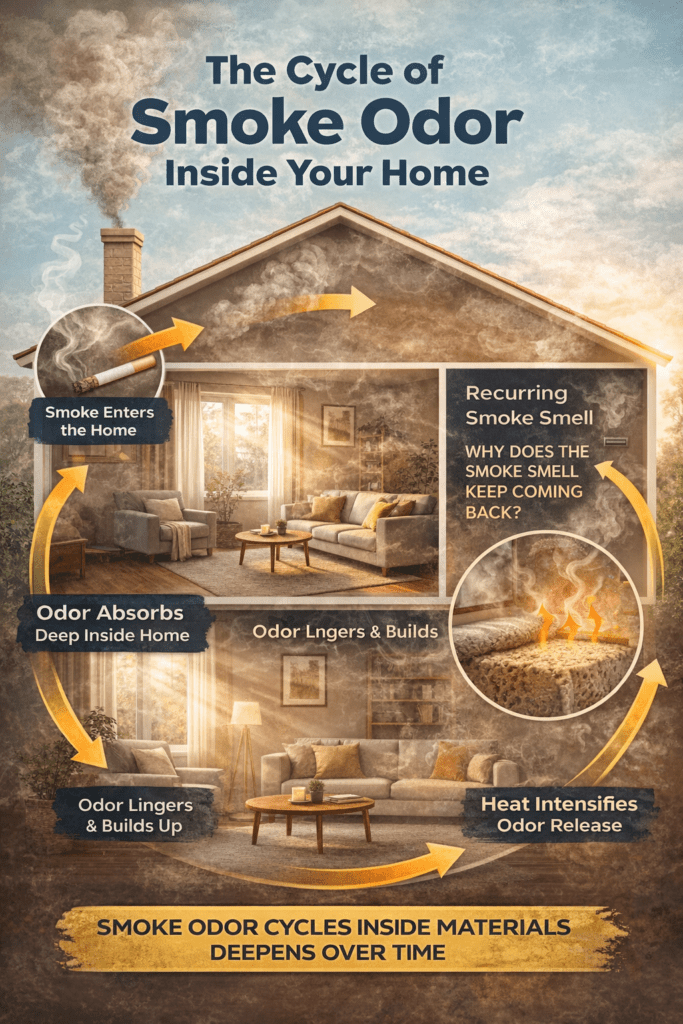
That’s because smoke odor isn’t just sitting in the air—it’s embedded into the structure of the space itself.
Where Smoke Odor Actually Lives
When someone smokes indoors, the particles released don’t just float away. They settle into:
- Drywall and paint
- Carpet and padding
- Upholstery and fabrics
- HVAC systems and ductwork
- Wood, trim, and cabinetry
Over time, these materials absorb and hold onto smoke residue, slowly releasing odor back into the air.
That’s why a home can smell fine for a few hours… and then suddenly smell like smoke again.
👉 The odor was never gone—it was just temporarily suppressed.
Why DIY Smoke Odor Solutions Fail
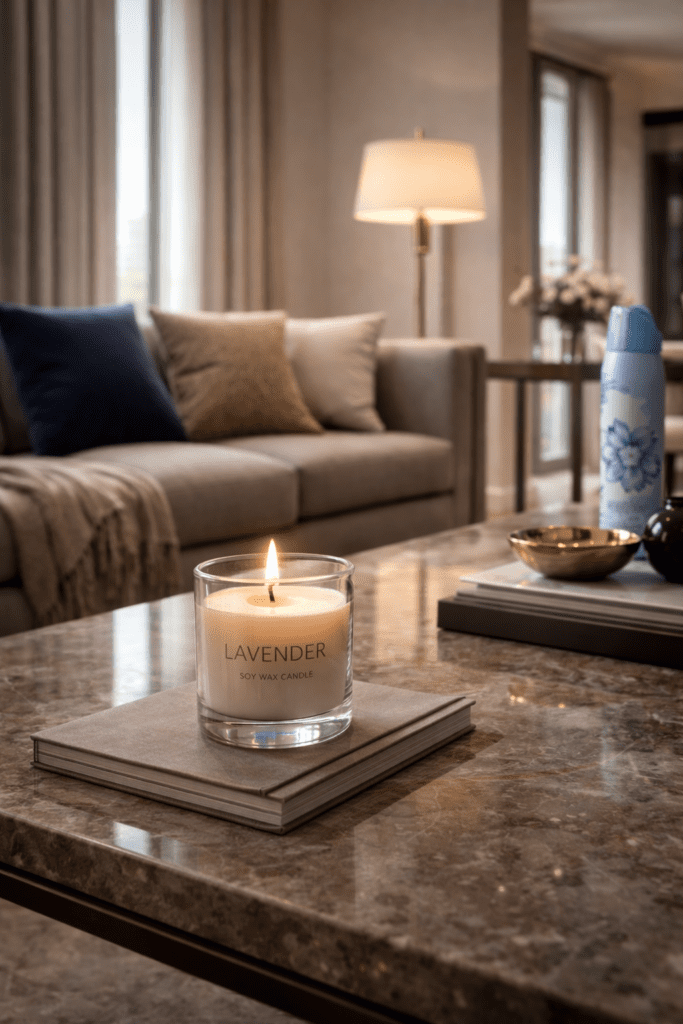
Most DIY approaches focus on what you can see or smell immediately. The problem is, smoke odor isn’t a surface-level issue.
Here’s where common methods fall short:
Air Fresheners & Sprays
They don’t remove odor—they mask it. Once the fragrance fades, the smoke smell returns.
Surface Cleaning
Wiping walls or shampooing carpets helps slightly, but doesn’t reach deep-embedded contamination.
Ventilation
Opening windows may reduce odor temporarily, but it doesn’t remove what’s trapped in materials.
Ozone & Harsh Chemicals
Often overused or misapplied. These methods can be inconsistent and don’t always address the source correctly.
The Real Issue: Smoke Odor Is a Source Problem
Smoke odor persists because it’s chemically bonded to surfaces and materials.
Until that bond is broken and the source is treated, the odor will continue to:
- Reappear after cleaning
- Intensify in heat or humidity
- Affect indoor air quality
- Impact how people perceive the space
This is especially critical in:
- Homes being sold
- Rental property turnovers
- Commercial spaces
- Multi-unit buildings
Because first impressions matter—and smoke odor is a deal-breaker.
A Real-World Scenario (And Why It Matters)

A property manager in Worcester turns over a rental unit after a long-term tenant moves out.
The tenant smoked indoors for years.
The unit is:
- Cleaned
- Painted
- Professionally cleaned
But when prospective tenants walk in…
they immediately notice the smell.
Applications drop. Showings slow down.
The unit sits vacant longer than expected.
👉 This is where odor becomes a business problem, not just a cleaning issue.
What Professional Smoke Odor Removal Actually Does
True smoke odor removal isn’t about covering smells—it’s about neutralizing them at the molecular level.
A professional approach includes:
1. Identifying Where the Odor Lives
Not guessing. Not spraying blindly.
Pinpointing the materials and areas holding odor.
2. Treating the Source Directly
Using targeted methods designed to break down odor compounds where they exist.
3. Penetrating Porous Materials
Reaching into surfaces like drywall, wood, and fabrics where odor is embedded.
4. Stabilizing the Environment
Ensuring odor doesn’t return with changes in temperature or humidity.
Why This Matters More Today Than Ever
People are more sensitive to indoor environments than they used to be.
Buyers, renters, and customers expect:
- Clean air
- Neutral scent environments
- Move-in-ready spaces
And smoke odor immediately signals:
- Poor maintenance
- Hidden issues
- Unclean conditions
Even if everything else looks perfect.
The Cost of Waiting
Delaying proper smoke odor removal can lead to:
- Longer property vacancy
- Reduced property value
- Negative first impressions
- Repeat cleaning costs that don’t solve the issue
And the longer odor sits, the deeper it penetrates—making it harder to remove.
The Bottom Line
If the smoke smell keeps coming back…
it’s because it was never actually removed.
Smoke odor is a source problem, not a surface problem.
And until the source is treated correctly, no amount of cleaning or masking will fix it.
Call to Action
If you’re dealing with a home, rental, or space that smells like smoke, don’t keep chasing temporary fixes.
Patriot OdorPros specializes in professional smoke odor removal in Central Massachusetts—eliminating odors at the source, not covering them up.
👉 If you can smell it, it’s still there. Let’s fix it the right way.
FAQs
1. Why does smoke odor keep coming back after cleaning?
Because smoke particles are embedded in materials like walls and flooring, not just on surfaces.
2. Can you permanently remove smoke odor?
In most cases, yes—when the source is properly treated rather than masked.
3. Does repainting remove smoke odor?
No. It may temporarily cover it, but the odor can still bleed through over time.
4. Is smoke odor harmful?
It can affect indoor air quality and overall comfort, especially in enclosed spaces.
5. How long does smoke odor removal take?
It depends on severity, but professional treatment is significantly faster than repeated DIY attempts.
6. Does smoke odor affect home value?
Yes. It can reduce buyer interest and perceived property quality.
7. Can smoke odor stay in HVAC systems?
Yes. Ductwork can trap and redistribute odor throughout the space.
8. Do air purifiers remove smoke odor?
They can help reduce particles in the air, but they don’t remove embedded odor sources.
9. What’s the difference between masking and removal?
Masking covers odor temporarily; removal eliminates the source causing it.
10. When should I call a professional?
If odor returns after cleaning, or if it’s noticeable to others entering the space.
