

Why Some Odors Seem Impossible to Solve

Most homeowners know what pet odor smells like.
They know cigarette smoke when they encounter it.
They recognize the musty smell of moisture or mildew.
But what happens when there is an odor that doesn't fit any category?
The smell appears suddenly.
It comes and goes.
Some days it's stronger than others.
You clean everything.
The smell remains.
Weeks later it's still there.
This is where specialty odor removal becomes necessary.
Unlike common odor categories, mystery odors often involve hidden contamination, unusual sources, or odor migration patterns that make identification difficult.
The problem isn't always that the odor is severe.
The problem is that nobody knows exactly where it's coming from.
Also Read 🏡Smoke Odor Removal Before Selling Your Home in Central Massachusetts | Improve Buyer Confidence
The Frustration of Living with an Unexplained Odor
Few household issues create more frustration than a recurring smell.
Homeowners often describe the experience like this:
- "We smell it every morning."
- "Visitors notice it immediately."
- "We've cleaned everything."
- "We can't figure out where it's coming from."
- "It keeps coming back."
The uncertainty often becomes more stressful than the odor itself.
People begin questioning:
- Is something damaged?
- Is there mold?
- Is there an animal somewhere?
- Is it affecting indoor air quality?
- Will it get worse?
Without identifying the source, the odor often becomes a guessing game.
And guessing is rarely effective.
👉🏻Specialty Odor Removal
Why Mystery Odors Are More Common Than Most People Realize
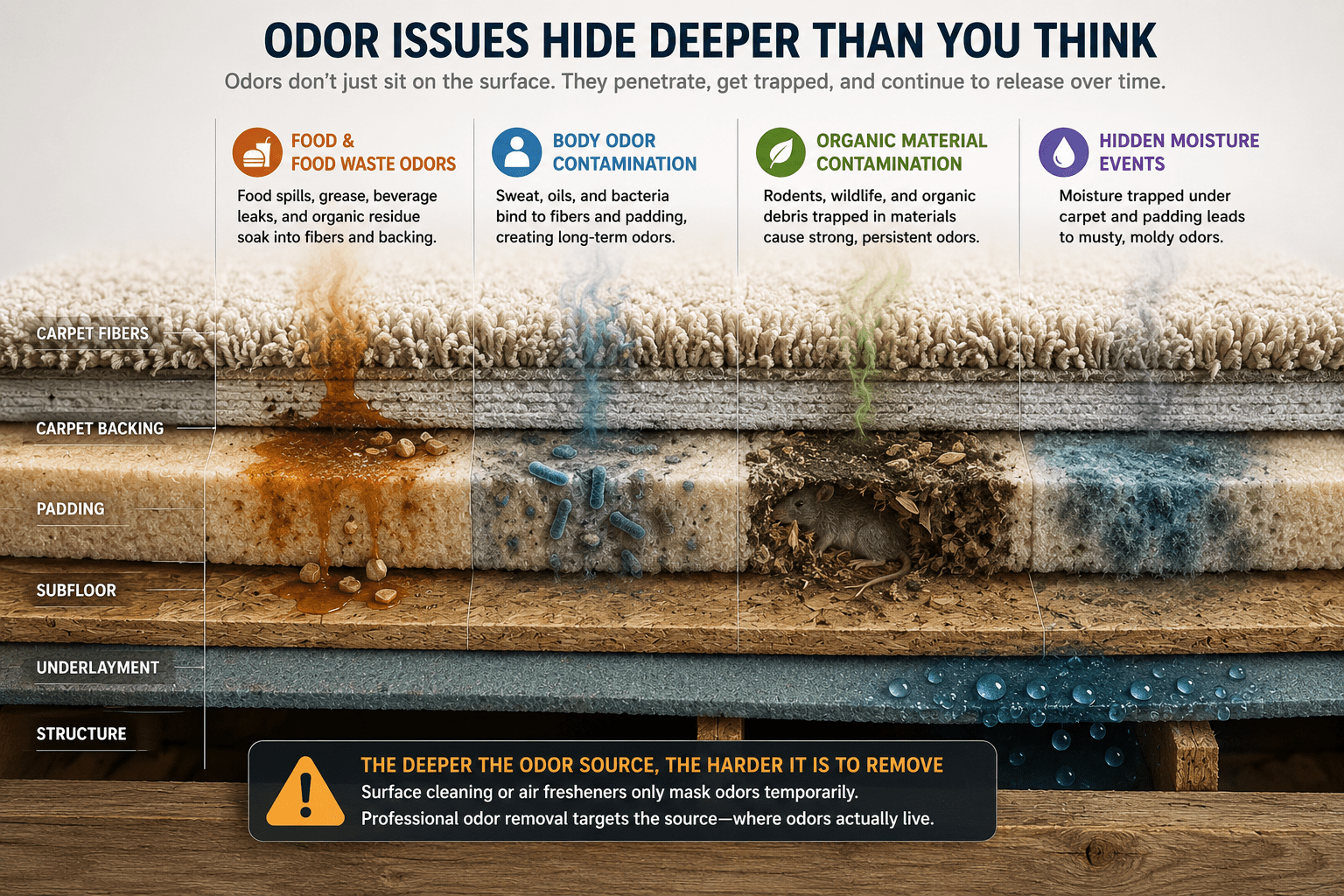
Many people assume unusual odors are rare.
In reality, specialty odor problems occur regularly in homes and businesses throughout Central Massachusetts.
Common sources include:
Food and Food Waste Odors
Small food spills can create surprisingly persistent odors.
Examples include:
- Spills behind appliances
- Forgotten pantry items
- Food waste contamination
- Beverage leaks
- Organic residue buildup
These odors often remain hidden long after the original source is forgotten.
Body Odor Contamination
Body odor can gradually become embedded in:
- Upholstered furniture
- Mattresses
- Office chairs
- Vehicle interiors
- Fitness equipment
Over time, odor compounds accumulate and become increasingly noticeable.
👉🏻Body & Locker Room Odors
Organic Material Contamination
Organic materials can create odor problems when they become trapped inside structures.
Examples include:
- Rodent activity
- Wildlife intrusion
- Forgotten storage materials
- Organic debris accumulation
These situations often produce strong recurring odors that seem impossible to locate.
👉🏻Food & Cooking Odors
Hidden Moisture Events
Not every moisture problem produces visible damage.
Small leaks behind walls, under flooring, or inside structural spaces can create odor conditions long before visible signs appear.
👉🏻Musty & Mildew Odor Removal
The Biggest Misconception About Odors
One of the most common misconceptions is:
"The odor must be strongest where the problem is."
This isn't always true.
Odor behaves differently than most people expect.
Air movement changes everything.
HVAC systems, temperature changes, pressure differences, and natural airflow can transport odor throughout an entire structure.
As a result:
- The smell may appear upstairs while the source is downstairs.
- The odor may seem strongest in a hallway while contamination exists inside a wall.
- The source may be hidden in one room while odor is detected in another.
This is why cleaning the area where the smell is noticed often fails to solve the issue.
The source simply remains elsewhere.
Real-World Central Massachusetts Scenario
Imagine a homeowner in Worcester who begins noticing an unusual smell in the family room.
The odor is subtle at first.
Over time it becomes stronger.
The homeowner:
- Cleans carpets
- Washes furniture
- Uses air fresheners
- Opens windows
- Changes HVAC filters
Nothing works.
Eventually, the source is discovered behind cabinetry where an old food spill had penetrated materials and begun creating odor compounds.
The visible room looked spotless.
The contamination remained hidden.
And because airflow carried odor throughout the home, the smell appeared to originate somewhere completely different.
This scenario happens more often than people realize.
Also Read 🏡Pet Odor Removal for Rental Properties in Central Massachusetts | Protect Tenant Satisfaction & Property Value
What Professional Specialty Odor Removal Does
Most recurring odor problems share one thing in common:
The source has never been properly identified.
That's why specialty odor removal begins with investigation before treatment.
Professional odor removal focuses on four critical stages.
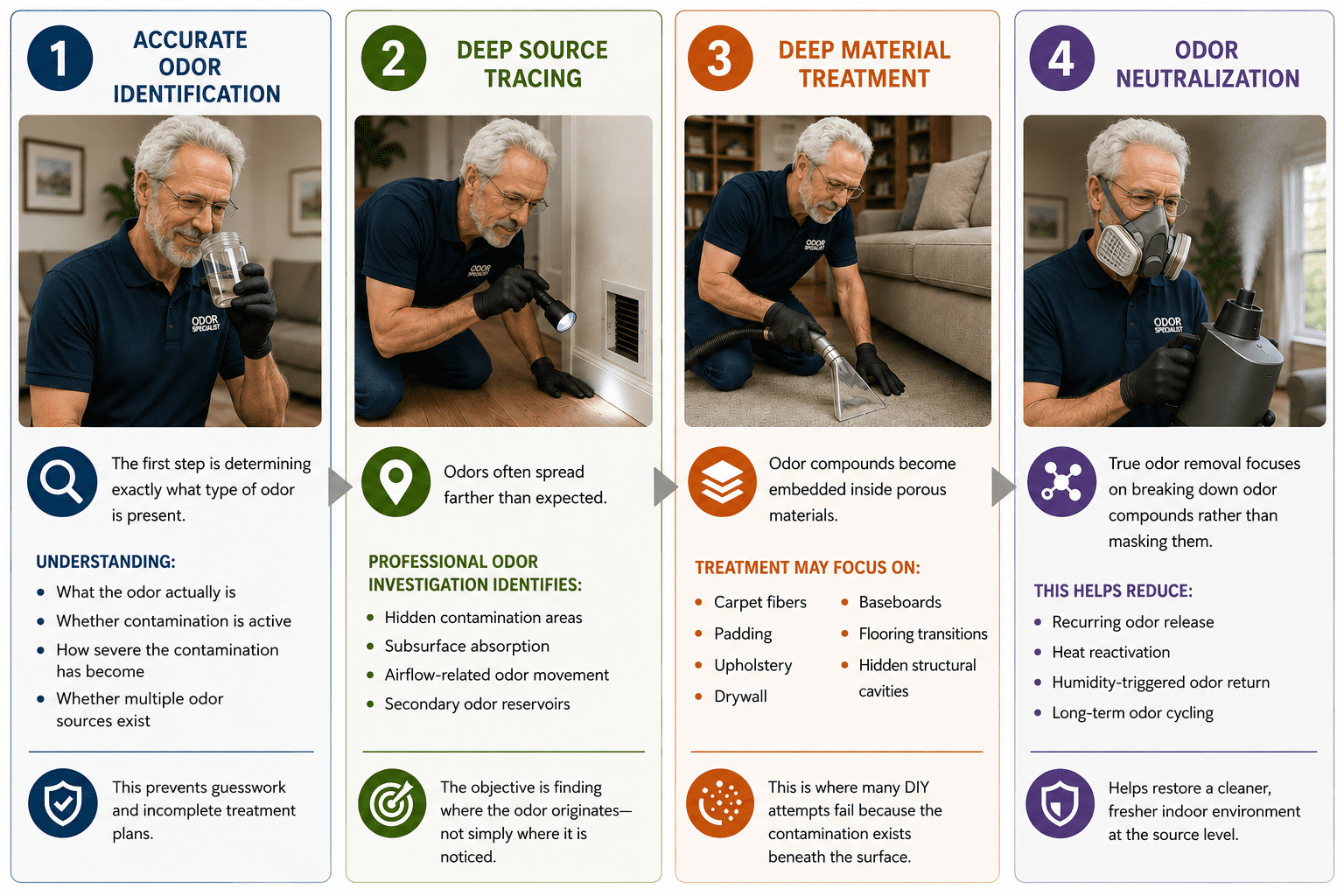
1. Accurate Odor Identification
The first step is determining exactly what type of odor is present.
Understanding:
- What the odor actually is
- Whether contamination is active
- How severe the contamination has become
- Whether multiple odor sources exist
This prevents guesswork and incomplete treatment plans.
2. Deep Source Tracing
Odors often spread farther than expected.
Professional odor investigation identifies:
- Hidden contamination areas
- Subsurface absorption
- Airflow-related odor movement
- Secondary odor reservoirs
The objective is finding where the odor originates—not simply where it is noticed.
3. Deep Material Treatment
Odor compounds become embedded inside porous materials.
Treatment may focus on:
- Carpet fibers
- Padding
- Upholstery
- Drywall
- Baseboards
- Flooring transitions
- Hidden structural cavities
This is where many DIY attempts fail because the contamination exists beneath the surface.
4. Odor Neutralization
True odor removal focuses on breaking down odor compounds rather than masking them.
This helps reduce:
- Recurring odor release
- Heat reactivation
- Humidity-triggered odor return
- Long-term odor cycling

👉🏻Industries We Serve
Why Covering Up Odors Usually Makes the Problem Worse
One of the biggest mistakes property owners make is trying to overpower an odor.
Examples include:
- Air fresheners
- Scented candles
- Plug-ins
- Fragrance sprays
These products may temporarily improve perception.
However:
The contamination remains.
In some situations, combining fragrance with the existing odor actually creates an even more unpleasant smell.
This is especially common with:
- Food odors
- Body odors
- Organic contamination
- Hidden moisture issues
The goal should never be covering the smell.
The goal should be eliminating the cause.
Also Read 🏡Specialty Odor Removal Central Massachusetts | Eliminate Strange Odors for Good
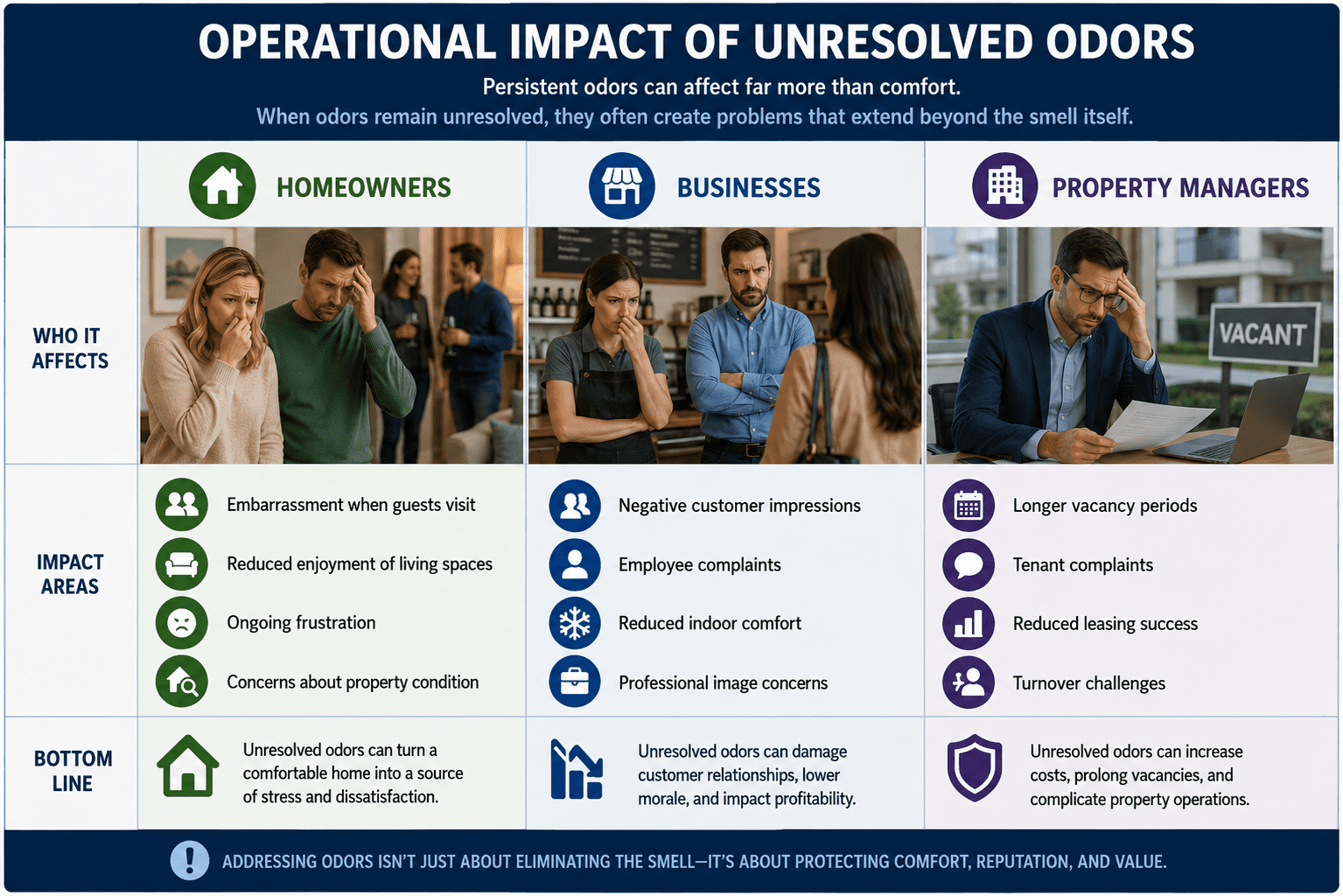
Future-Proofing Insight
Indoor environmental expectations continue to evolve.
Today's homeowners, tenants, customers, and employees increasingly expect:
- Clean indoor environments
- Better indoor air quality
- Neutral-smelling spaces
- Healthy property conditions
As awareness grows, unresolved odor issues are becoming less acceptable and more noticeable.
Property owners who address odor issues proactively often experience:
- Better occupant satisfaction
- Improved property perception
- Stronger property marketability
- Reduced recurring complaints
Also Read 🏡Smoke Odor Removal Central Massachusetts | Eliminate Smoke Smell at the Source
The Bottom Line
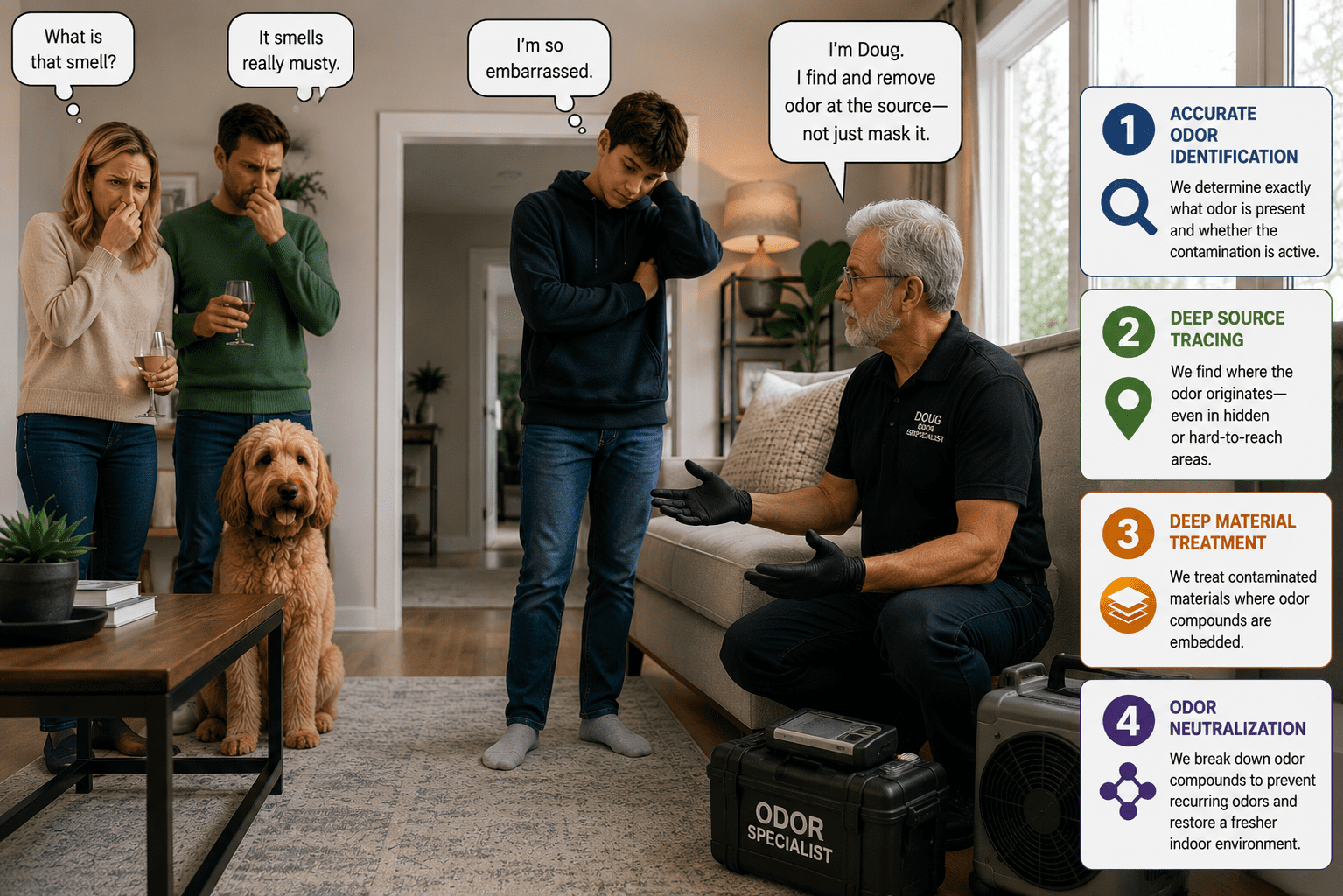
Mystery odors rarely solve themselves.
If a smell continues returning after cleaning, there is usually an underlying source that has not been identified.
The longer the contamination remains, the more opportunity it has to spread through materials and airflow systems.
Professional specialty odor removal focuses on finding the source first and eliminating contamination where it actually exists.
Because when the source is removed, the odor stops returning.
Give Us A Call
Patriot OdorPros provides specialty odor removal services throughout Central Massachusetts.
Whether the source is:
- Food contamination
- Body odor buildup
- Organic material
- Hidden moisture
- Unknown recurring smells
Our process focuses on identifying the cause and eliminating odor at its source.
👉 If you've cleaned everything and the smell keeps coming back, it's time to stop guessing.
Contact Patriot OdorPros today.
📞Contact Us / Get a Quote

🏡Homepage
10 FAQs
1. What is a mystery odor?
A mystery odor is a recurring smell whose source is not immediately obvious or easily identified.
2. Why does an odor keep returning after cleaning?
Because the contamination source often remains embedded inside materials or hidden areas.
3. Can food odors become permanent?
Yes. Food contamination can absorb into porous materials and continue releasing odor over time.
4. Can body odor become embedded in furniture?
Yes. Upholstered materials can absorb body oils and odor compounds.
5. Why do odors seem stronger in some rooms?
Airflow can transport odor away from the original source.
6. Can HVAC systems spread odors?
Yes. HVAC systems often circulate odor throughout a building.
7. Do air fresheners solve odor problems?
No. They typically mask odor temporarily rather than eliminate contamination.
8. Can specialty odors affect businesses?
Yes. Persistent odors can impact customer perception and workplace comfort.
9. What causes recurring odor cycles?
Embedded contamination, humidity, heat, and airflow often contribute to recurring odor release.
10. What is professional specialty odor removal?
It is a source-focused process that identifies, traces, treats, and neutralizes difficult or hidden odor contamination.
