

🧠 ODOR INTELLIGENCE™ EXECUTIVE BRIEF
For Realtors & Real Estate Professionals
⚡ 60-Second Summary
A musty smell is more than an unpleasant basement odor—and it isn't simply the smell of moisture.
Persistent musty odors are often associated with microbial volatile organic compounds (mVOCs) released as mold, mildew, bacteria, and fungi grow in damp environments. The source may be hidden behind drywall, beneath flooring, around plumbing, inside insulation, in crawl spaces, or within HVAC systems.
For real estate professionals, that distinction matters.
A home can look clean, dry, and showing-ready while an odor provides an early clue that a hidden moisture condition may need further investigation. Homeowners may also become nose blind to persistent odors, while buyers entering the property notice them immediately.
The takeaway: Don't just ask, “How do we get rid of the smell?”
Ask, “What is causing the smell?”
🔑 Key Takeaways
- Musty doesn't simply mean wet. The odor may be associated with microbial activity occurring because moisture has created favorable growing conditions.
- Your nose may detect a problem before your eyes can see one. Hidden moisture and microbial activity can exist behind walls, under flooring, in insulation, crawl spaces, attics, or HVAC components.
- Rain and humidity can make an existing odor more noticeable. Increased moisture and changing indoor conditions may intensify musty odors.
- A clean-looking property can still have an odor problem. Cosmetic appearance alone doesn't rule out a hidden source.
- Sellers may not smell what buyers smell. Olfactory adaptation—or “nose blindness”—can cause occupants to stop noticing an odor they've lived with for an extended period.
- Air fresheners don't solve source problems. Fragrance may temporarily mask an odor while the conditions producing it remain.
- Finding the source comes before eliminating the odor. Persistent odors warrant investigation rather than repeated masking.
Read More
⏱️ Full Article Reading Time: Approximately 9–10 Minutes
⬇️⬇️⬇️⬇️
Why That "Old House Smell" Isn't Just an Old House

Most people have experienced it.
You open the basement door and catch a damp, earthy odor.
You unlock a vacation cabin after months away.
You walk into a storage room that's been closed all winter.
Maybe it's a spare bedroom that simply "smells old."
Many homeowners assume they're just smelling moisture. Others blame age, stale air, or lack of cleaning.
But here's the surprising truth:
Water itself has almost no smell.
That musty odor is usually your home's way of telling you something much more important is happening behind the scenes.
The smell is often the first warning sign that excess moisture has created an environment where microorganisms have begun to grow. Long before you see visible mold, your nose may already be detecting chemical compounds released into the air.
Understanding why this happens helps explain why simply spraying an air freshener—or even cleaning visible mold—is rarely enough to solve the problem.
Moisture Is the Beginning—Not the Odor
Imagine spilling water on your kitchen counter.
If you wipe it up immediately, nothing happens.
No smell develops.
No mold appears.
Now imagine that same water slowly soaking into drywall behind a cabinet.
Or leaking beneath hardwood flooring.
Or remaining trapped inside insulation after a roof leak.
The moisture itself doesn't create an odor.
Instead, it changes the environment.
Once building materials remain damp for extended periods, they become ideal habitats for microscopic organisms that naturally exist almost everywhere around us.
These include:
- Mold
- Mildew
- Bacteria
- Certain fungi
- Yeasts
These organisms don't suddenly appear because of water—they're already present in tiny numbers in the environment.
Moisture simply allows them to multiply.
Musty & Mildew Odor Removal
The Real Source of the Musty Smell
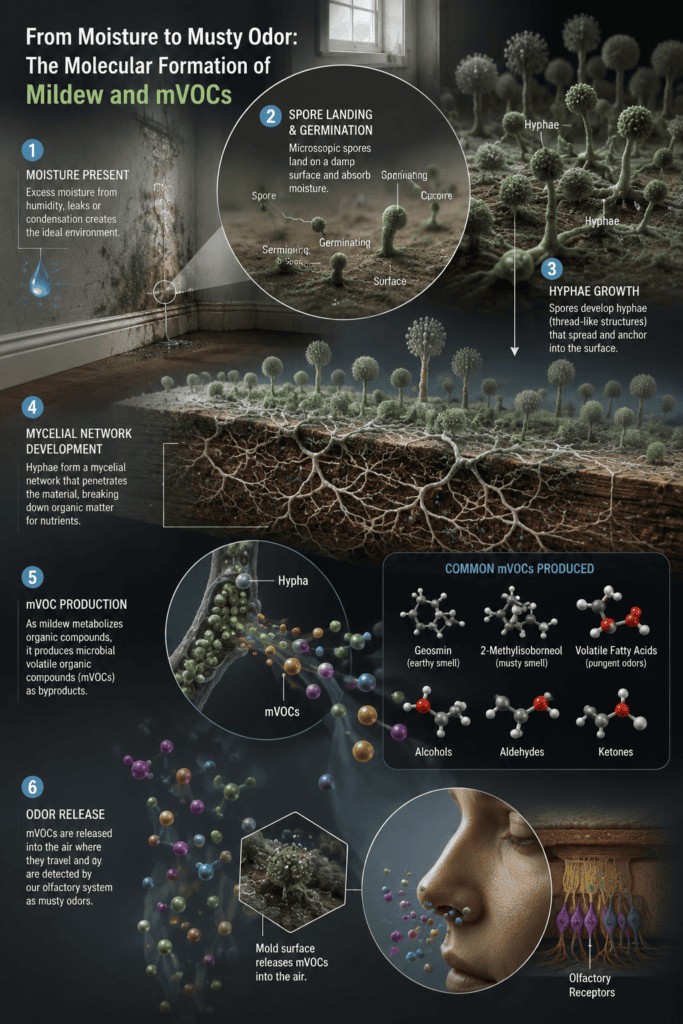
As mold and bacteria grow, they metabolize nutrients found in wood, drywall, paper backing, insulation, dust, and other organic materials.
During this process they release microscopic gases known as:
Microbial Volatile Organic Compounds (mVOCs)
These airborne compounds are responsible for many of the odors people describe as:
- Musty
- Damp
- Earthy
- Moldy
- Dirty basement smell
- Wet cardboard
- Old books
- Rotten wood
Every species produces a slightly different mixture of gases.
Some create sweet smells.
Others smell earthy.
Some have almost a mushroom-like aroma.
Others resemble wet leaves or damp soil after rain.
The combination creates the unmistakable odor most homeowners recognize immediately.
Ironically...
You're not actually smelling mold.
You're smelling what mold releases into the air while it's alive and actively growing.
Also Read 📖Musty Odor Removal Central Massachusetts | Eliminate Musty Smells at the Source
📋 Realtor Action
If you notice a persistent musty odor while preparing a property for market:
1. Don't automatically call it “old house smell.”
Treat recurring odor as information worth investigating.
2. Ask when the odor is strongest.
After rain? During humid weather? When the HVAC runs? After the basement has been closed?
Patterns can provide useful clues.
3. Don't recommend masking it before a showing.
Heavy fragrance layered over a musty odor can create another red flag for buyers.
4. Encourage the seller to investigate possible moisture sources.
Plumbing, foundations, HVAC equipment, crawl spaces, attics, flooring, and previous water damage may warrant evaluation.
5. Bring in the appropriate professional when the source isn't obvious.
The goal isn't to make the house smell better for Saturday's showing.
The goal is to understand why it smells that way in the first place.
💡 Why This Matters
Odor influences perception.
A musty smell can transform an otherwise beautiful finished basement from an asset into a question mark.
For the realtor, identifying that issue before buyers encounter it creates an opportunity to help the seller investigate the source, address the underlying condition, and present the property with greater confidence.
The smartest time to investigate an odor is before a buyer starts asking where it's coming from.
Why Your Nose Notices It Before Your Eyes Do
One of the fascinating characteristics of odor science is that your nose is often more sensitive than your eyesight.
Visible mold requires enough colonies to become noticeable.
Odor molecules require only tiny concentrations to reach your nose.
This means a home can smell musty even when no visible mold is present.
That's because the microbial gases travel freely through the air while the organisms remain hidden behind:
- Drywall
- Cabinets
- Flooring
- Ceiling cavities
- Wall insulation
- HVAC systems
- Crawl spaces
Air currents carry these molecules throughout the home.
Your nose detects them long before you discover where they're coming from.
In many cases, the smell is actually your home's earliest warning system.
Also Read 📖Why Homes Become Nose Blind: The Science Behind Why You Can’t Smell Your Own House

Also Read 📖Why Every Odor Has a Source: The Science Behind Finding the Real Problem
🏡 What Every Realtor Should Know
Musty odors can become a buyer-confidence problem before they become a visible property problem.
A buyer walking into a basement and immediately noticing a damp or earthy smell may begin wondering:
Is there mold?
Has this basement flooded?
Is there a foundation problem?
Is something leaking behind the wall?
What is this going to cost me?
The odor doesn't prove that any one of those conditions exists. But once a buyer notices it, uncertainty enters the showing.
That makes persistent odor something worth addressing before photography, open houses, inspections, and buyer walkthroughs whenever possible.
Why Air Fresheners Only Cover the Problem

One of the biggest misconceptions about musty odors is believing they can simply be removed with fragrance.
Air fresheners don't eliminate microbial gases.
They temporarily overwhelm your nose with stronger scents.
Eventually those fragrances fade.
The microbial compounds remain.
The musty smell returns.
Some products chemically react with certain odor molecules, but unless the moisture source and microbial growth are eliminated, new odor compounds continue being produced.
It's like trying to silence a smoke alarm without putting out the fire.
The symptom disappears temporarily.
The cause remains.
Also Read 📖The Science Behind Scent and Emotion | Patriot OdorPros
The Hidden Places Musty Odors Begin
Many odor problems originate in areas homeowners rarely inspect.
Some of the most common sources include:
- Behind shower walls
- Beneath bathroom flooring
- Inside HVAC ducts
- Under kitchen cabinets
- Around plumbing penetrations
- Crawl spaces
- Attics with roof leaks
- Window framing
- Basement rim joists
- Wet insulation
Because air naturally moves throughout a home, the smell often appears far away from where the moisture actually exists.
That makes locating the true source much more complicated than simply following your nose.
Why Cleaning Alone Often Doesn't Solve the Problem
One of the most frustrating experiences for homeowners is cleaning every visible surface only to have the musty smell return days or weeks later.
That's because odor-producing microorganisms don't always grow where you can see them.
You may thoroughly clean:
- Baseboards
- Floors
- Furniture
- Countertops
- Bathroom tile
...while the real problem continues growing behind the drywall or beneath the flooring.
Even visible mold is often only a small portion of a much larger hidden colony.
Until the moisture source is corrected and the affected materials are properly dried, cleaned, or replaced when necessary, the microorganisms continue producing new odor compounds.
Cleaning the surface without addressing what's underneath is like mowing weeds without removing the roof.
Also Read 📖What Is a Mystery Odor? Understanding Specialty Odor Removal in Central Massachusetts
The Relationship Between Mold and Indoor Air Quality
Not every musty smell means dangerous mold is present.
However, persistent odors do indicate that excess moisture has changed your indoor environment.
As microbial activity increases, indoor air quality can decline due to elevated concentrations of:
- Microbial volatile organic compounds (mVOCs)
- Mold spores
- Dust and organic debris
- Elevated humidity
- Airborne particulates
Some people notice very little.
Others are much more sensitive.
Individuals with allergies, asthma, compromised immune systems, or respiratory conditions may experience irritation sooner than others.
While odor alone cannot diagnose a health problem, it should never be ignored simply because "you get used to it."
Specialty Odor Removal
Can a Home Smell Musty Without Visible Mold?
Absolutely.
In fact, many professional inspections begin because a homeowner smells something unusual long before mold becomes visible.
Common hidden causes include:
- A slow plumbing leak inside a wall
- Condensation around HVAC equipment
- Moisture trapped beneath vinyl flooring
- Wet insulation inside exterior walls
- Crawl space humidity
- Improper attic ventilation
- Previous water damage that never completely dried
- Small roof leaks around flashing or vents
These situations can create ideal conditions for microbial growth while leaving the home's visible surfaces looking perfectly normal.
That's why professional moisture detection equipment often reveals problems that cannot be found through a simple visual inspection.
Also Read 📖How Smell Influences Home Buyers Within the First 30 Seconds | Patriot Odor Pros
Why "Nose Blindness" Makes the Problem Worse
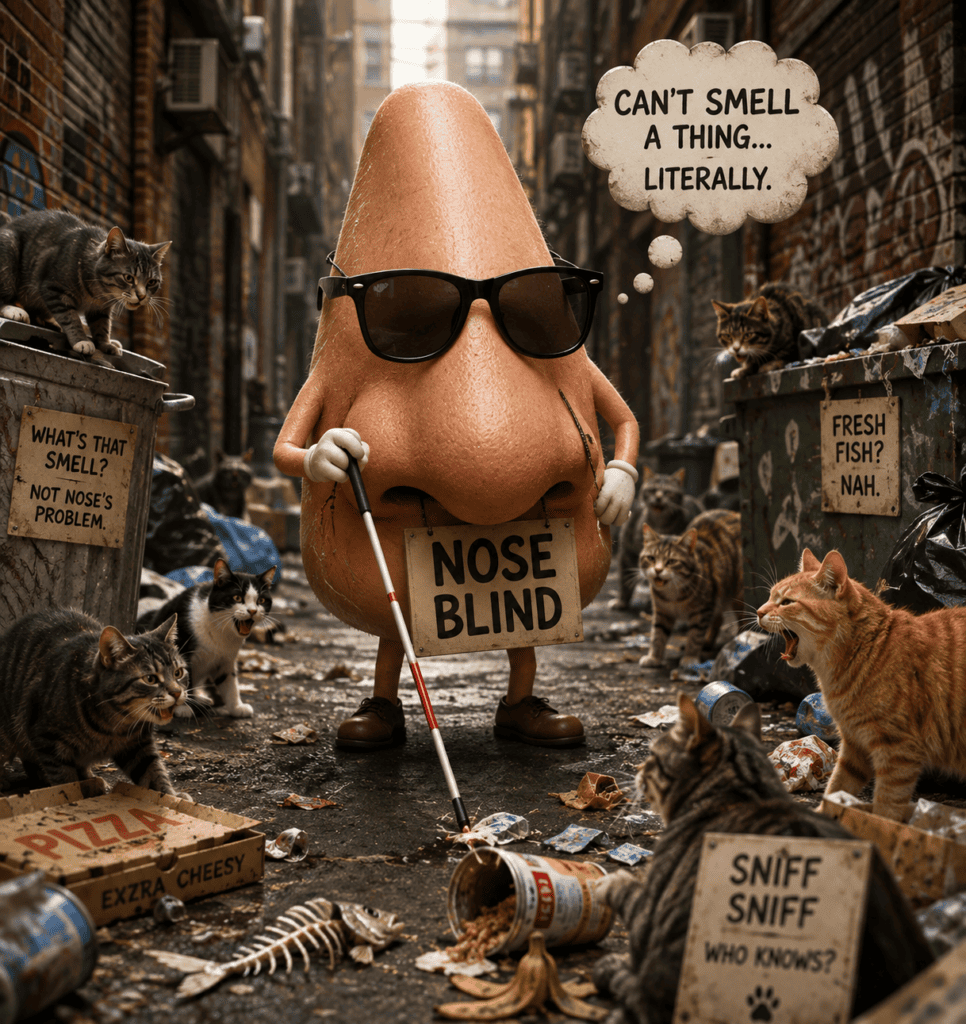
One of the most fascinating aspects of odor science is that our brains quickly adapt to continuous smells.
This process—known as olfactory adaptation, or more commonly nose blindness—allows your brain to stop paying attention to odors it encounters every day.
Homeowners often don't realize how noticeable the smell has become because their brain has essentially filtered it out.
Visitors, however, notice it immediately.
This creates conversations like:
"Your basement smells a little musty."
"Really? I don't smell anything."
Neither person is wrong.
The homeowner's olfactory system has simply adapted to the constant exposure.
Ironically, this adaptation often delays investigation, allowing moisture problems to continue unnoticed for months—or even years.
Also Read 📖Why Homes Become Nose Blind: The Science Behind Why You Can’t Smell Your Own House
Why Professionals Don't Chase the Smell
When homeowners first notice an odor, the natural instinct is to search for where the smell seems strongest.
Professional odor investigators take a different approach.
Rather than chasing the odor itself, they search for the conditions creating it.
That investigation may include:
- Moisture mapping with specialized meters
- Thermal imaging to locate hidden moisture
- Humidity measurements
- HVAC inspections
- Building material evaluations
- Crawl space and attic inspections
- Airflow analysis
The goal isn't simply to identify where the smell is.
It's to determine why the smell exists in the first place.
Once the source is identified, the odor can often be eliminated permanently instead of repeatedly masked.
Also Read 📖The Olfactory System Explained Simply | Patriot OdorPros
Prevention Is Always Easier Than Remediation
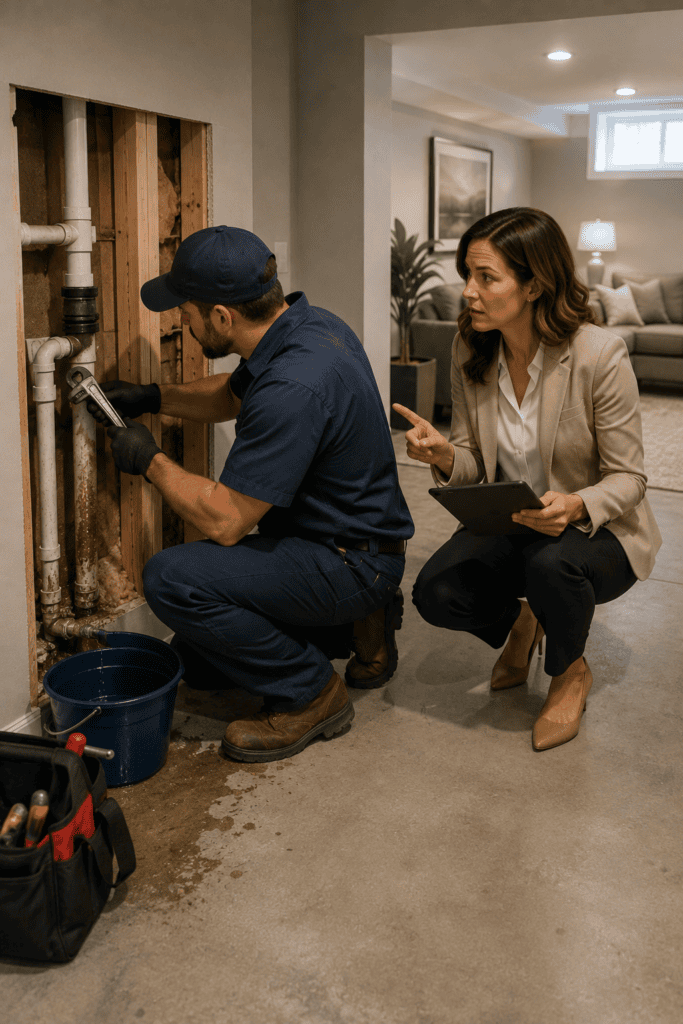
The best way to avoid musty odors is to prevent excess moisture from lingering in your home.
Simple habits can make a significant difference:
- Repair plumbing leaks promptly.
- Keep gutters and downspouts directing water away from the foundation.
- Maintain indoor humidity between 30% and 50%.
- Use bathroom and kitchen exhaust fans during and after use.
- Ensure crawl spaces and attics are properly ventilated.
- Dry wet carpets, drywall, and flooring as quickly as possible after water intrusion.
- Have HVAC systems inspected and maintained regularly.
- Investigate persistent damp or earthy smells instead of ignoring them.
The earlier moisture problems are identified, the less likely they are to develop into larger—and more expensive—issues.
https://www.mass.gov/doc/guidance-to-control-excess-moisture-and-mold-owners-fact-sheet/download
Service Areas – Worcester, MA
The Science Is Clear
Musty odors are rarely random.
They are often the result of a chain reaction:
Moisture creates the right conditions.
Microorganisms begin to grow.
Those microorganisms release microscopic gases.
Your nose detects those gases long before your eyes detect visible damage.
Understanding this process changes the way we think about odors.
Instead of asking, "How do I cover up this smell?"
The better question becomes:
"What is creating this odor in the first place?"
Finding that answer is the key to solving the problem permanently.
Odor Removal Services
Conclusion: Your Nose May Be Giving You an Early Warning
A musty smell isn't just an unpleasant nuisance—it can be one of the earliest indicators that excess moisture is affecting your home's indoor environment. While candles, sprays, and deodorizers may temporarily cover the odor, they can't stop microorganisms from producing new odor compounds if the underlying moisture problem remains.
At Patriot Odor Pros, we understand that successful odor removal begins with finding the source, not masking the symptom. Using professional moisture detection techniques, environmental assessments, and proven odor remediation methods, we identify the conditions allowing musty odors to develop and help eliminate them at their origin.
If you've noticed a persistent damp or earthy smell that keeps coming back, don't ignore what your nose may be telling you. The sooner the source is identified, the easier it is to restore a cleaner, healthier, and fresher indoor environment.
☎️Contact Us / Get a Quote

🏡Homepage
Frequently Asked Questions
1. What causes a musty smell in a house?
A musty smell is typically caused by microbial volatile organic compounds (mVOCs) released by mold, mildew, bacteria, and fungi growing in damp areas.
2. Can moisture itself smell?
No. Clean water has very little odor. The smell usually comes from microorganisms growing because moisture is present.
3. Does a musty smell always mean mold?
Not always, but it almost always indicates excess moisture and conditions that support microbial growth somewhere in the home.
4. Can mold be hidden behind walls?
Yes. Mold frequently grows behind drywall, beneath flooring, inside insulation, or within crawl spaces and attics where it isn't immediately visible.
5. Why is the odor stronger after it rains?
Rain increases humidity and may introduce additional moisture into hidden areas, encouraging microorganisms to produce more odor-causing compounds.
6. Will air fresheners eliminate musty odors?
No. Air fresheners only mask the smell temporarily. They do not remove the moisture or microbial growth producing the odor.
7. Why can't I smell the odor anymore, but visitors can?
Your brain can adapt to continuous odors through a process called olfactory adaptation, commonly known as nose blindness.
8. Can HVAC systems spread musty odors?
Yes. If moisture or microbial growth exists within HVAC components or ductwork, the system can distribute odor molecules throughout the home.
9. How do professionals locate hidden moisture?
Professionals use tools such as moisture meters, thermal imaging cameras, humidity measurements, and detailed building inspections to identify hidden moisture sources.
10. When should I call a professional?
If a musty odor persists, returns after cleaning, becomes stronger during humid weather, or cannot be traced to an obvious source, a professional evaluation can help identify and resolve the underlying cause before the problem worsens.
