

The Smell Keeps Coming Back—Why?

You've vacuumed the vehicle.
You've wiped down the interior.
You've purchased another air freshener.
Maybe you've even paid for a professional detailing service.
Everything smells fresh for a few days.
Then the odor returns.
Sound familiar?
For vehicle owners throughout Central Massachusetts, recurring odors are one of the most frustrating problems to solve.
The reason is surprisingly simple.
The odor source is often still there.
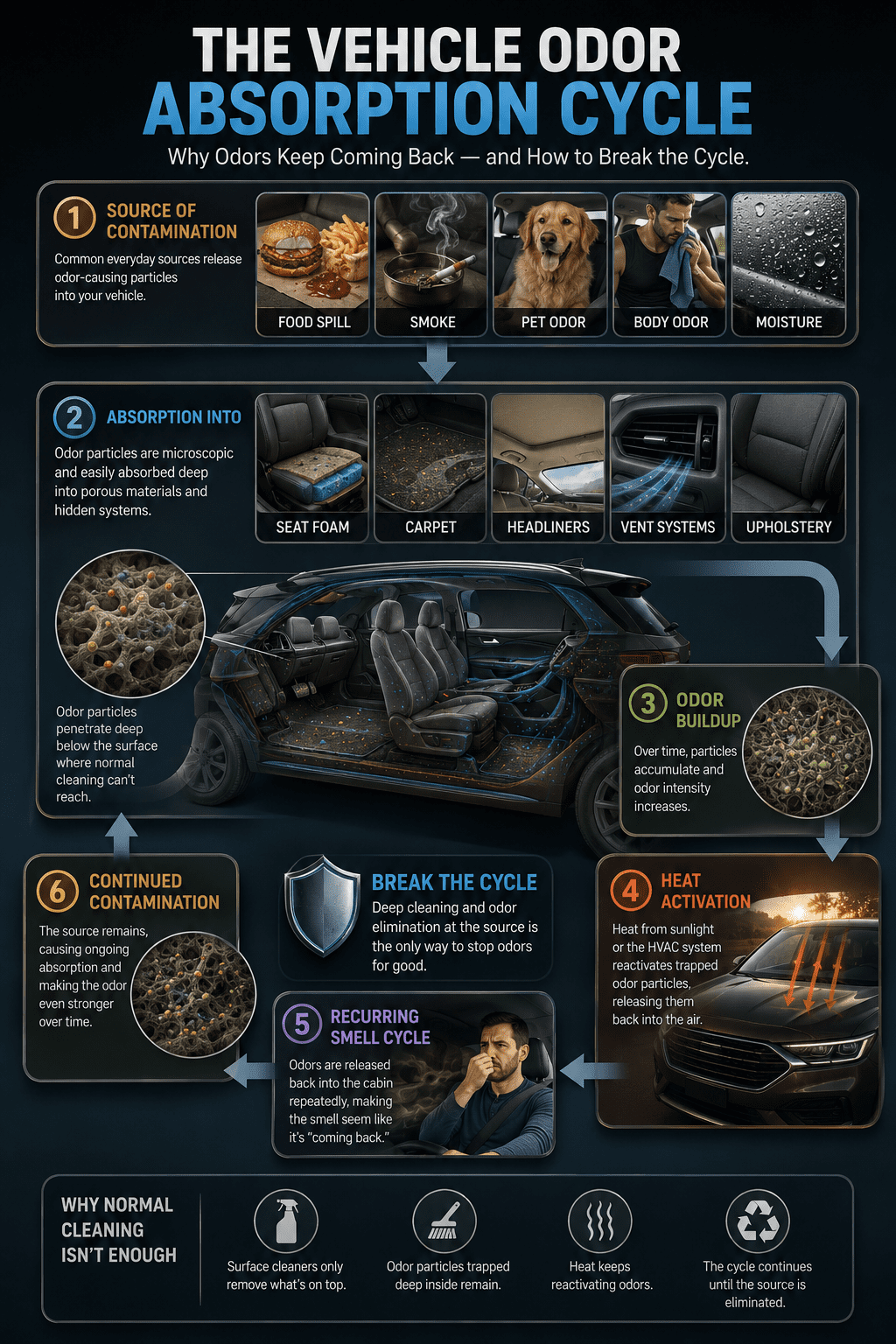
Most vehicle odors don't live on the surface where they can easily be cleaned.
Instead, they become trapped deep inside materials where traditional cleaning methods rarely reach.
Until the source is addressed, the odor continues cycling through the vehicle over and over again.
Why Vehicle Odors Behave Differently Than Household Odors
Vehicles create unique conditions for odor contamination.
Unlike homes, vehicles are:
- Small enclosed environments
- Exposed to temperature extremes
- Frequently occupied
- Subject to constant air circulation
- Filled with porous materials
These conditions allow odor compounds to become highly concentrated.
A minor spill inside a home may disappear.
The same spill inside a vehicle may continue creating odor problems for months or even years.
This is especially true during hot summer months in Massachusetts when vehicle interiors can reach extreme temperatures.
Heat acts like an amplifier.
Odors trapped inside materials are released back into the air more aggressively, making contamination seem worse than ever.
Also Read 🚘What Is a Mystery Odor? Understanding Specialty Odor Removal in Central Massachusetts
The Most Common Sources of Vehicle Odors
Pet Odors
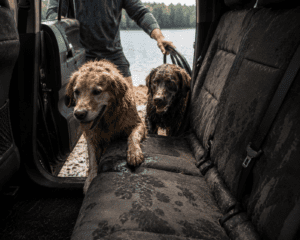
Pet odors are among the most common vehicle odor problems.
Contributors include:
- Body oils
- Hair
- Dander
- Moisture
- Accidents
- Wet fur
These contaminants often become embedded inside:
- Seat fabric
- Seat foam
- Carpet
- Cargo areas
- Floor mats
Over time, the odor becomes part of the vehicle interior.
Many owners are surprised when a vehicle continues smelling like pets months after the animal is no longer regularly riding inside.
👉🏻Pet Odor Removal
Food & Food Waste Odors
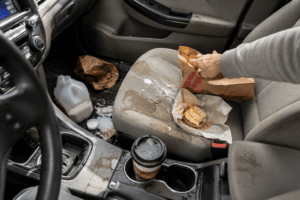
Food contamination creates some of the most stubborn odor problems.
Common examples include:
- Fast food spills
- Milk spills
- Coffee spills
- Soft drink leaks
- Forgotten snacks
- Beverage accidents
The problem isn't always what you can see.
Many spills penetrate beneath:
- Seats
- Carpet
- Console areas
- Storage compartments
Once organic material becomes trapped, odor compounds continue developing long after the original spill is forgotten.
👉🏻Food & Cooking Odors
Smoke Odors

Smoke contamination is one of the most invasive odor issues vehicles experience.
Smoke particles settle into:
- Headliners
- Seat foam
- Carpet
- Plastic trim
- Ventilation systems
- Dash materials
Unlike many odors, smoke spreads almost everywhere.
This is why smoke-contaminated vehicles often continue smelling despite repeated cleaning efforts.
👉🏻Cannabis Smoke Odor Removal
Body Odor Contamination

Body odor contamination develops gradually.
Daily commuting introduces:
- Sweat
- Skin oils
- Organic compounds
Over time these compounds become absorbed into:
- Driver seats
- Armrests
- Seat belts
- Upholstery
Many vehicle owners never notice the buildup because it develops slowly.
Passengers often notice it immediately.
👉🏻Body & Locker Room Odors
Moisture & Humidity Issues
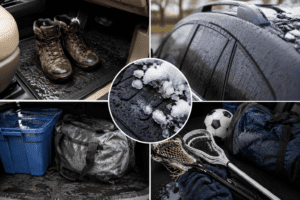
Moisture is one of the most overlooked odor sources.
Examples include:
- Wet shoes
- Snow
- Rainwater
- Damp cargo
- Wet sports equipment
When moisture becomes trapped beneath carpeting or inside insulation materials, odor-producing conditions can develop quickly.
👉🏻Musty & Mildew Odor Removal
Common Myths About Vehicle Odors
Myth #1: A Detailed Vehicle Is An Odor-Free Vehicle
False.
Detailing focuses primarily on visible cleaning.
Odor contamination often remains hidden beneath surfaces.
Myth #2: Air Fresheners Remove Odors
False.
Air fresheners mask odors temporarily.
They rarely eliminate the contamination causing the smell.
Myth #3: Smoke Odor Only Lives In Fabric
False.
Smoke particles contaminate nearly every interior surface.
Myth #4: Vehicle Odors Don't Affect Resale Value
False.
Persistent odors can negatively influence buyer perception and reduce resale appeal.
 Understanding this difference is critical.
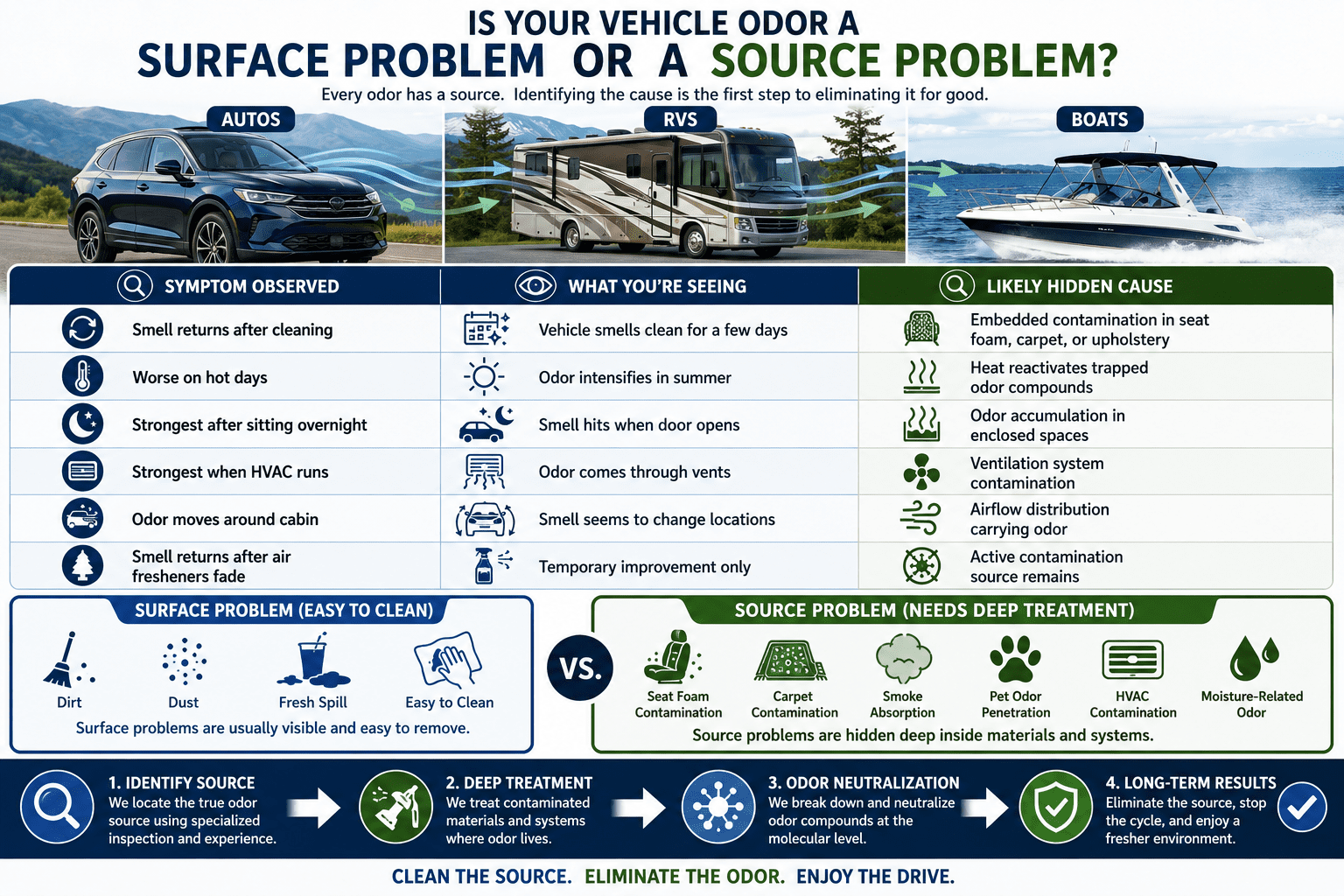 Understanding this difference is critical.
Most recurring vehicle odors are source problems—not surface problems.
Real-World Central Massachusetts Scenario
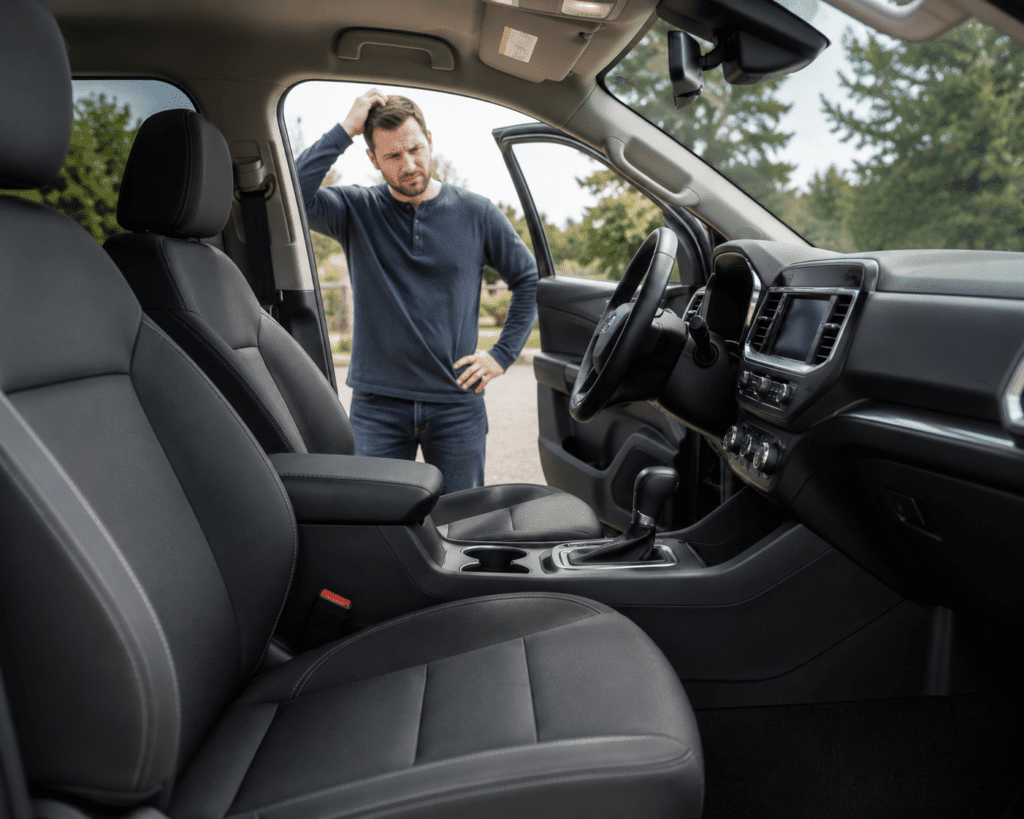
A family SUV in Worcester spends years transporting:
- Children
- Pets
- Sports equipment
- Fast food
- Daily commuters
The vehicle appears clean.
The owner regularly vacuums and wipes surfaces.
Yet a persistent odor develops.
Air fresheners help briefly.
Detailing improves things temporarily.
Then the smell returns.
The reason?
The contamination has become embedded inside the vehicle's materials.
The visible surfaces are clean.
The source remains hidden.
And until the source is addressed, the cycle continues.
👉🏻Service Areas – Worcester, MA
What Professional Vehicle Odor Removal Does
Most recurring vehicle odor problems share one common characteristic:
The source has never been fully addressed.
Professional vehicle odor removal focuses on eliminating contamination where it actually exists rather than masking symptoms.
Also Read 🚘Vehicle Odor Removal Central Massachusetts | Eliminate Car & RV Odors at the Source
1. Accurate Odor Identification
The first step is understanding:
- What the odor actually is
- Whether contamination remains active
- How severe the problem has become
- Whether multiple odor sources exist
This prevents incomplete treatment and guesswork.
2. Deep Source Tracing
Vehicle odors often spread far beyond where they are first noticed.
Professional odor investigation identifies:
- Hidden food spills
- Pet contamination
- Smoke absorption areas
- Moisture intrusion points
- HVAC contamination
- Secondary odor reservoirs
The objective is finding where contamination originates—not simply where the smell is strongest.
3. Deep Material Treatment
Odor compounds become embedded inside:
- Seat foam
- Upholstery
- Carpet backing
- Headliners
- Insulation
- Cargo compartments
- Hidden structural cavities
This is where many DIY approaches fail because the contamination exists beneath visible surfaces.
4. Odor Neutralization
True odor removal focuses on breaking down odor compounds.
This helps reduce:
- Recurring odor release
- Heat reactivation
- Humidity-triggered odor return
- Long-term odor cycling
👉🏻Specialty Odor Removal
Cars, Boats, and RVs: Why Each Presents Unique Challenges
👉🏻Vehicle, Boat & RV Odors
Personal Vehicles
Cars and SUVs experience:
- Daily occupancy
- Food consumption
- Pet transportation
- Commuting contamination
Frequent use creates ongoing opportunities for odor accumulation.
RVs
RVs combine:
- Vehicle materials
- Residential materials
- Limited ventilation
- Seasonal storage
This creates ideal conditions for odor retention.
Boats
Marine environments introduce:
- Humidity
- Moisture exposure
- Organic materials
- Seasonal inactivity
Boat odors often involve a combination of moisture and organic contamination.

Operational Impact of Vehicle Odors
Persistent odors affect more than comfort.
Vehicle Owners May Experience:
- Embarrassment when passengers ride along
- Reduced enjoyment of the vehicle
- Ongoing frustration
- Lower resale value
Businesses May Experience:
- Negative customer impressions
- Driver complaints
- Reduced fleet presentation
- Professional image concerns
Fleet Operators May Face:
- Employee dissatisfaction
- Vehicle appearance concerns
- Customer perception issues
- Reduced confidence in vehicle condition
When odors remain unresolved, the problem often extends well beyond the smell itself.
Future-Proofing Insight
Vehicle ownership trends are changing.
People are keeping:
- Cars longer
- Trucks longer
- RVs longer
- Boats longer
As ownership periods increase, odor management becomes increasingly important.
Addressing odor issues early helps prevent:
- Deep contamination
- Material degradation
- Long-term odor cycling
- Reduced resale value
The longer contamination remains embedded, the more difficult it often becomes to address.
👉🏻Recruiting Page
The Bottom Line
Vehicle odors rarely disappear because they are cleaned.
They disappear when the contamination source is identified and properly treated.
If the odor keeps returning, the source likely remains hidden inside:
- Seat foam
- Carpeting
- Headliners
- Ventilation systems
- Other porous materials
Professional odor removal focuses on eliminating contamination at its source instead of covering it up.
Because if the source remains, the odor usually returns.
Give Us A Call...
Patriot OdorPros provides professional:
- Vehicle Odor Removal
- Boat Odor Removal
- RV Odor Removal
- Pet Odor Removal
- Smoke Odor Removal
- Specialty Odor Removal
throughout Central Massachusetts.
If your vehicle smells clean for a few days and then the odor returns, it's time to stop masking the problem and start addressing the source.
📞 Contact Patriot OdorPros today.

🏡Homepage
10 FAQs
1. Why does my vehicle still smell after cleaning?
Because odor contamination often remains embedded inside materials beneath visible surfaces.
2. Can pet odors stay in vehicles permanently?
Pet odors can persist for long periods if contamination remains inside seat foam, carpeting, or upholstery.
3. Why does my vehicle smell worse in hot weather?
Heat reactivates odor compounds trapped inside materials.
4. Do air fresheners remove vehicle odors?
No. Air fresheners temporarily mask odors but do not eliminate the source.
5. Can smoke odor be removed from a vehicle?
Yes. Professional treatment focuses on addressing smoke contamination embedded throughout the vehicle.
6. Can food spills create long-term odors?
Yes. Food contamination often penetrates beneath visible surfaces.
7. Why does my vehicle smell when I turn on the air conditioning?
The HVAC system may be circulating odor compounds trapped inside ventilation components.
8. Can boats and RVs develop the same odor problems as cars?
Yes. Boats and RVs often experience odor issues related to moisture, food, storage, and organic contamination.
9. Can vehicle odors affect resale value?
Yes. Persistent odors can negatively impact buyer perception and vehicle marketability.
10. What is professional vehicle odor removal?
It is a source-focused process that identifies, traces, treats, and neutralizes odor contamination embedded inside vehicle materials and systems.
