

🧠 Odor Intelligence™ Executive Brief
⏱ 60-Second Summary
Have you ever walked into someone else's home and immediately noticed an odor, only to have the homeowner insist they couldn't smell anything?
They're probably telling the truth.
This common phenomenon is called olfactory adaptation, or more commonly, nose blindness. Your brain is designed to ignore familiar smells so it can pay attention to new information in your environment. While this helps you function more efficiently, it also means you may stop noticing persistent odors from pets, smoke, moisture, cooking, or mold—even though everyone else can smell them.
For homeowners, this can lead to unnoticed odor problems. For Realtors, it can influence buyer perception within seconds of entering a home. Understanding why nose blindness happens is the first step toward recognizing hidden odor issues before they become bigger problems.
🏡 What Every Realtor Should Know
✔ Buyers experience a home's odors with completely fresh senses.
✔ Sellers often become nose blind and genuinely don't realize an odor exists.
✔ Even faint odors can reduce buyer confidence and suggest hidden problems such as mold, smoke damage, or pet contamination.
📋 Realtor Action
Before listing a property, ask someone unfamiliar with the home to walk through and provide an honest opinion about its smell. A fresh nose often detects odors that homeowners no longer notice.
🏠 Why This Matters
Odors influence first impressions long before buyers begin evaluating square footage, finishes, or curb appeal. Understanding nose blindness helps Realtors explain odor concerns objectively while helping homeowners prepare their property for a more successful showing.
Quick Navigation
- What Does "Nose Blind" Mean?
- Why the Brain Filters Familiar Smells
- How Olfactory Adaptation Protects Us
- Why Visitors Smell What Homeowners Don't
- The Most Common Odors Homeowners Miss
- Can You Reset Your Sense of Smell?
- Why Professional Odor Investigation Matters
Read More ⬇️⬇️⬇️
Imagine leaving your home for a week-long vacation.
You return, unlock the front door, and suddenly notice something.
Maybe it's a faint musty smell.
Perhaps it's a lingering pet odor.
Maybe the kitchen still carries yesterday's cooking aromas.
Within fifteen minutes, however...
The smell seems to disappear.
Did it actually go away?
Not at all.
Your brain simply stopped paying attention.
This remarkable process is one of the most fascinating abilities of the human nervous system. Scientists call it olfactory adaptation. Most people simply know it as becoming nose blind.
The same biological process that helps us ignore our own perfume, laundry detergent, and shampoo can also prevent us from recognizing odors that guests, friends, and potential homebuyers notice almost immediately.
Also Read📖The Science Behind Scent and Emotion | Patriot OdorPros
What Does "Nose Blind" Really Mean?
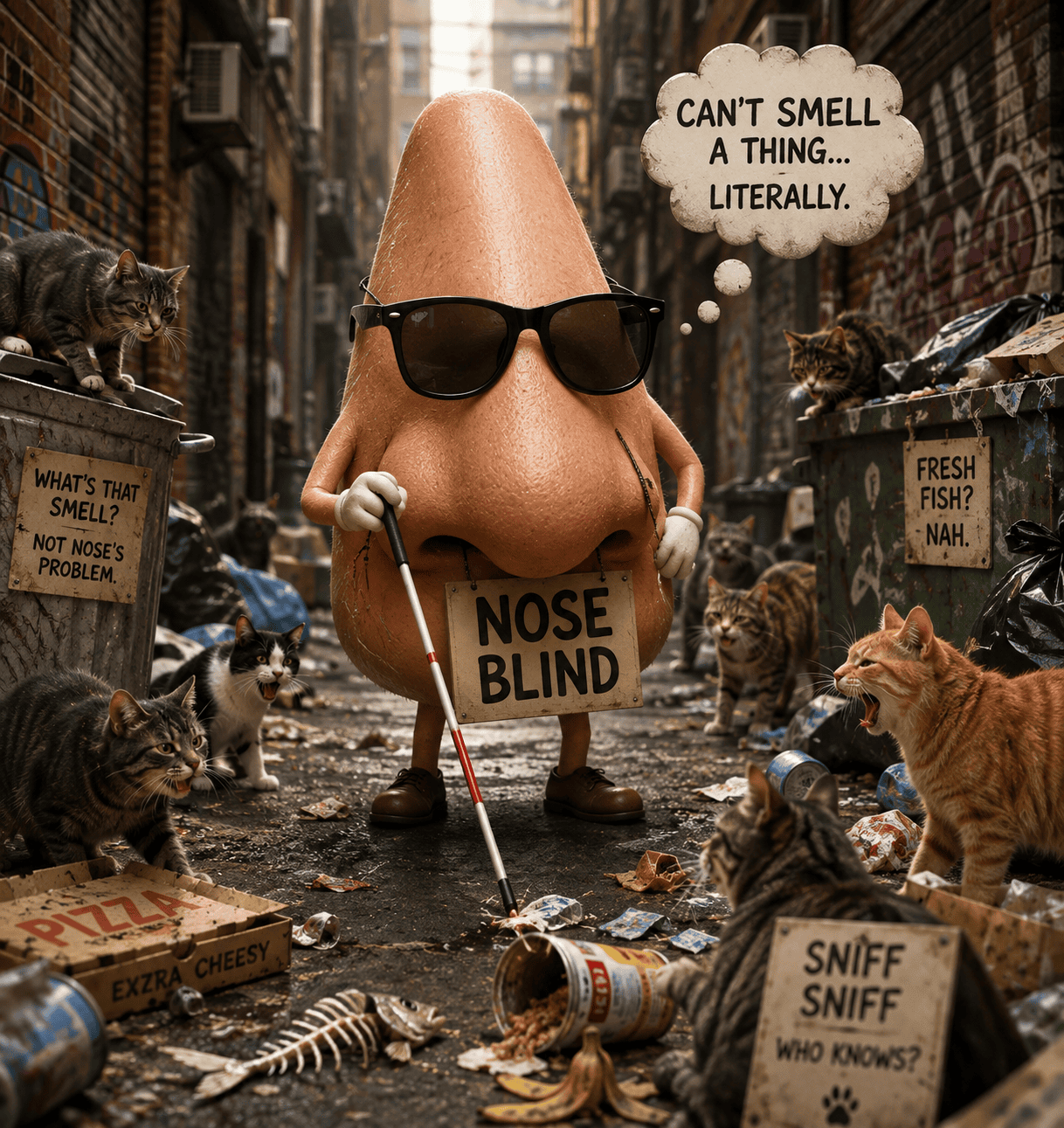
Many people assume becoming nose blind means they've lost part of their sense of smell.
That's not what's happening at all.
Your nose continues detecting odor molecules exactly as it always has.
The receptors inside your nasal cavity are still sending signals to your brain.
The difference is what happens after those signals arrive.
Instead of constantly alerting you to the same smell, your brain quietly moves it into the background.
Think about the clothes you're wearing right now.
You can probably feel them if you think about them.
Moments ago, however, you likely weren't aware of them at all.
Your brain decided that information wasn't important enough to demand your attention.
Smells work exactly the same way.
This process allows your brain to conserve energy while remaining alert to new odors that could indicate danger, opportunity, or change.
Without olfactory adaptation, every familiar scent would compete for your attention all day long.
Pet Odor Removal
Why the Brain Filters Familiar Smells

Imagine if you constantly noticed:
- Your laundry detergent.
- Your shampoo.
- Your favorite perfume.
- Your leather furniture.
- Fresh paint from two years ago.
- The natural scent of your own home.
Your brain would quickly become overwhelmed.
Instead, the nervous system constantly asks one simple question:
"Has anything changed?"
If the answer is no, the brain gradually reduces its response.
This allows us to immediately notice something different, such as:
- Smoke entering the room.
- Natural gas.
- Food burning on the stove.
- A chemical spill.
- Fresh flowers.
- Rain blowing through an open window.
From a survival standpoint, this is incredibly efficient.
Your brain isn't ignoring smells because they don't exist.
It's ignoring them because it believes they're already understood.
Also Read 📖The Olfactory System Explained Simply | Patriot OdorPros
The Science of Olfactory Adaptation
Researchers refer to this process as olfactory adaptation or odor fatigue.
It begins surprisingly quickly.
Within just a few minutes of continuous exposure to many odors, the brain starts reducing how strongly those smells are perceived.
The odor molecules haven't disappeared.
The receptors inside your nose haven't stopped working.
Instead, your brain has simply lowered the "volume."
Scientists believe this adaptation occurs both at the receptor level inside the nose and within the brain itself, allowing us to remain highly sensitive to new odors while filtering those that remain constant.
It's one of the reasons firefighters may stop noticing smoke on their gear after a long day, restaurant employees rarely smell the kitchen after a shift, and homeowners become accustomed to the everyday scent of their own living spaces.
Also Read 📖Smoke Odor Removal Before Selling Your Home in Central Massachusetts | Improve Buyer Confidence
🏠 Real-World Example
A family adopts a new puppy.
During the first week, they notice the occasional "dog smell" throughout the house.
A month later, they barely notice it at all.
Friends who visit, however, immediately recognize that a dog lives in the home.
Nothing about the odor has changed significantly.
The family's brain simply adapted to it.
Also Read 📖What Is a Mystery Odor? Understanding Specialty Odor Removal in Central Massachusetts
Why Visitors Smell What Homeowners Don't

Every person experiences a home through a different sensory lens.
When you live in the same environment every day, your brain becomes extremely efficient at filtering familiar smells. But when someone enters your home for the first time, their brain has no "odor history" to compare against.
Everything is new.
That means every scent is evaluated.
Within the first few seconds of walking through the front door, a visitor may notice:
- 🐾 Pet odors
- 🌧️ Damp or musty air
- 🚬 Smoke residue
- 🍳 Lingering cooking smells
- 🗑️ Garbage or organic waste
- 🧴 Strong air fresheners
- 🌿 Mold or mildew odors
Ironically, homeowners are often surprised when a guest comments on a smell they genuinely cannot detect.
They're not ignoring it.
They're experiencing a completely normal neurological process.
Also Read📖How Smell Influences Home Buyers Within the First 30 Seconds | Patriot Odor Pros
The Five Most Common Odors Homeowners Become Nose Blind To
While virtually any odor can become familiar over time, certain household smells are especially common because they're produced continuously.
🐾 Pet Odors
Dogs and cats naturally produce body oils, dander, saliva, and hair. Even well-cared-for pets contribute scent to carpets, furniture, bedding, and flooring.
Most owners stop noticing these odors within days or weeks.
Visitors usually don't.
Pet Odor Removal
🌧️ Musty Moisture Odors
Basements, crawl spaces, and damp storage areas often produce an earthy smell caused by excess moisture and microbial activity.
Because these odors develop gradually, homeowners frequently become accustomed to them while visitors notice them immediately.
Musty & Mildew Odor Removal
🚬 Smoke Residue
Smoke particles from cigarettes, cigars, fireplaces, or previous fire damage can remain embedded in drywall, insulation, carpeting, upholstery, and HVAC systems for years.
People living in the home often adapt.
Guests usually recognize the smell almost instantly.
Tobacco Smoke Odor Removal
🍳 Cooking Odors
Foods rich in oils, spices, garlic, onions, seafood, and fried ingredients leave behind microscopic residues that accumulate on cabinets, ceilings, fabrics, and ventilation systems.
Families often perceive these smells as "home."
Visitors may experience them very differently.
Food & Cooking Odors
💨 HVAC Odors
Your heating and cooling system moves air throughout the entire home.
If mold, dust, pet contamination, or smoke residue exist inside the ductwork or air handler, those odors can quietly circulate from room to room.
Homeowners may adapt to the smell without realizing the HVAC system is distributing it every day.
Property Managers & Landlords
Can You Reset Your Sense of Smell?

Fortunately, yes—at least temporarily.
One of the easiest ways to notice your home's true odor is to spend time away from it.
After returning from:
- A vacation
- A weekend trip
- A full day at work
- An overnight stay elsewhere
...your brain has partially reset its adaptation to your home's familiar smells.
Many homeowners notice odors immediately after opening the front door.
Unfortunately, this awareness often lasts only a few minutes before the brain once again begins filtering those familiar scents.
Some people believe smelling coffee beans "resets" the nose.
While coffee may temporarily interrupt certain odor perceptions, research hasn't shown it to be a reliable method of restoring smell sensitivity.
The best reset remains simple:
Leave the environment.
Return with fresh senses.
Also Read 📖Why Do Vehicle, Boat & RV Odors Keep Coming Back | Central Massachusetts
🧠 Odor Science Fact
Your brain processes familiar smells so efficiently that you often stop noticing them within minutes. Yet those same odor molecules remain in the air and on surfaces, where they can still be detected by anyone entering the space for the first time.
Why Nose Blindness Can Affect Home Sales

For Realtors, nose blindness is more than an interesting scientific concept.
It can directly influence buyer perception.
Buyers typically form opinions about a home within moments of walking through the front door.
If the first thing they notice is:
- A damp smell
- Pet odors
- Smoke residue
- Heavy fragrances masking another odor
...their confidence in the property may immediately decline.
Even if the odor has a relatively simple explanation, buyers often begin asking themselves:
- Is there hidden mold?
- Has someone smoked inside?
- Are pets damaging the flooring?
- Is there water damage?
- Will this be expensive to fix?
Those questions can distract from everything else the property has to offer.
Helping homeowners recognize potential odor issues before listing creates a better first impression and allows buyers to focus on the home's features—not its smells.
Why Professional Odor Investigation Matters

One of the biggest lessons from odor science is surprisingly simple:
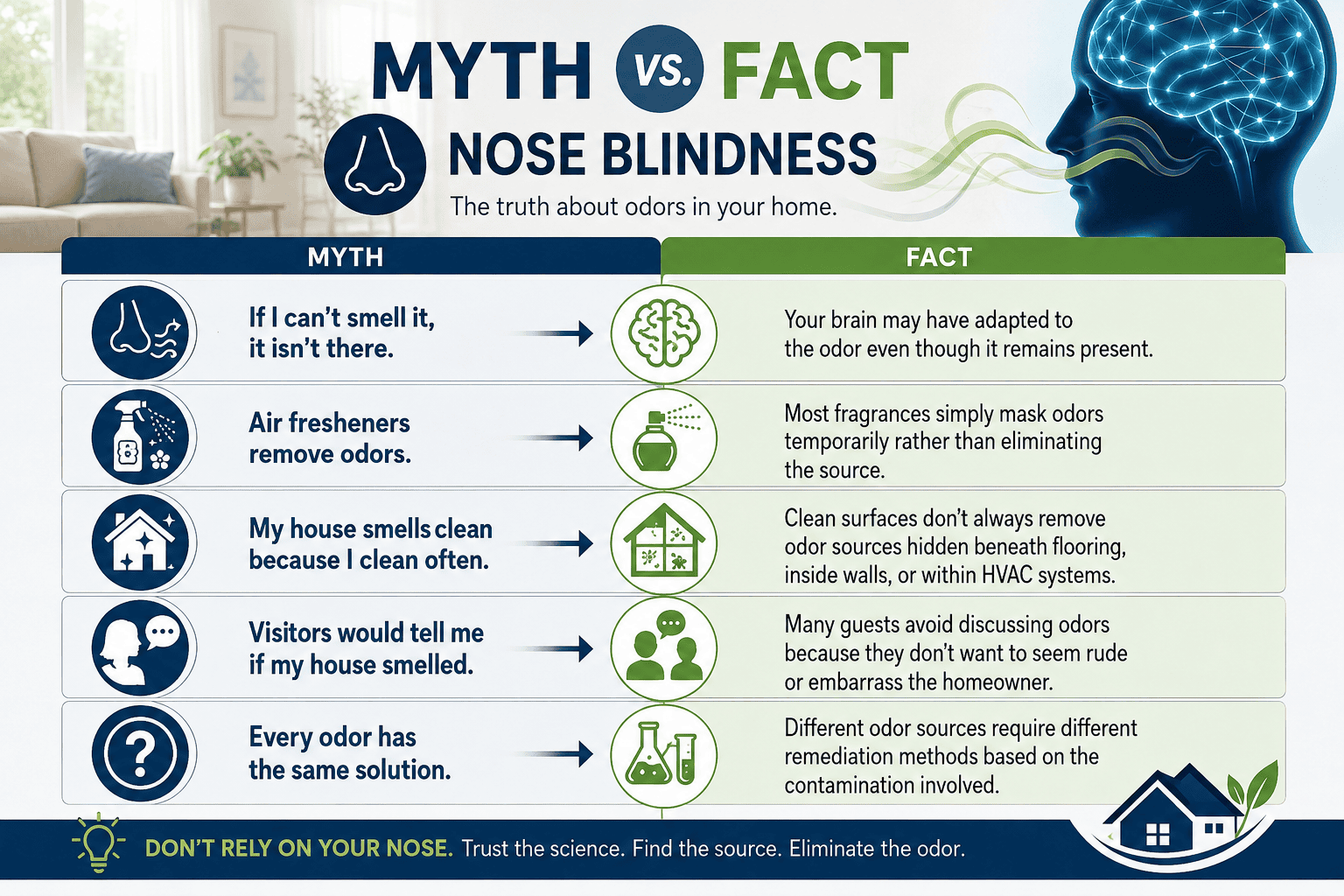
Just because you can't smell an odor doesn't mean it isn't there.
Your brain is designed to ignore familiar smells so you can focus on new information. It's an incredible survival mechanism—but it also means you may overlook warning signs that visitors, family members, customers, or prospective homebuyers notice immediately.
A persistent odor isn't just an inconvenience. It can be the first indication of hidden moisture, microbial growth, smoke contamination, pet accidents, or other conditions affecting your home's comfort and indoor environment. Covering the smell with candles or air fresheners may make the room seem fresher for a short time, but it doesn't remove the source that's producing the odor.
That's where experience matters.
At Patriot Odor Pros, we don't guess—and we don't simply mask odors. We use a systematic, science-based approach to investigate what is creating the smell, determine how far the contamination has spread, and recommend the most effective remediation strategy for your specific situation.
Whether you're preparing to sell your home, trying to create a healthier living environment for your family, or simply tired of wondering, "What is that smell?", our goal is to give you clear answers and lasting results.
Because every odor has a source, every odor has a solution—and every solution begins with finding the source.
If you've started to wonder whether you've become nose blind to your own home, don't rely on a candle, an air freshener, or wishful thinking. Let the professionals at Patriot Odor Pros help you uncover what's really causing the odor and restore the clean, fresh environment your home was meant to have.
Schedule your professional odor evaluation today and experience the confidence that comes from knowing the problem has been identified—and solved—the right way.
☎️Contact Us / Get a Quote

Frequently Asked Questions
1. What is nose blindness?
Nose blindness, or olfactory adaptation, is the brain's natural process of reducing awareness of familiar odors after continuous exposure.
2. Why can't I smell my own house?
Because your brain has adapted to your home's everyday scent, making familiar odors less noticeable over time.
3. Why do visitors notice odors before homeowners?
Visitors experience the home's odors for the first time and haven't adapted to them, making those smells much more noticeable.
4. Can nose blindness happen with pet odors?
Yes. Pet owners commonly become accustomed to odors from fur, dander, litter boxes, bedding, and accidents.
5. Does opening windows remove odors?
No. Fresh air may dilute odors temporarily, but it won't eliminate the source if contamination remains.
6. Can HVAC systems spread odors?
Yes. Heating and cooling systems can circulate odors from one area of the home throughout the entire house.
7. Can I reset my sense of smell?
Yes. Spending time away from your home often allows you to notice familiar odors again when you return.
8. Why do homes smell different after vacation?
Your brain temporarily loses its adaptation while you're away, allowing you to notice odors again upon returning.
9. Can nose blindness hurt the sale of my home?
Yes. Buyers often notice odors immediately, and unpleasant smells can affect their perception of the property's condition and value.
10. When should I contact Patriot Odor Pros?
If odors persist, repeatedly return after cleaning, or you're unsure whether you've become nose blind, a professional odor evaluation can identify the source and recommend lasting solutions.
